Categories
New Blog
How should the selection and installation strategies of SPDs be adjusted to achieve effective surge protection?
July 17 , 2026When grounding conditions are poor, the core principle of SPD application shifts from "low-impedance current discharge" to "equipotential bonding and voltage limitation," and the technical strategy is adjusted accordingly:
Prioritize using SPDs with a "3+1" or "1+1" wiring configuration: For TT or TN systems, traditional SPDs may fail to operate effectively due to poor grounding if a low-impedance ground connection is unavailable.
Prioritize using SPDs with a "3+1" or "1+1" wiring configuration: For TT or TN systems, traditional SPDs may fail to operate effectively due to poor grounding if a low-impedance ground connection is unavailable.
Strengthening local equipotential bonding: Since it is impossible to efficiently conduct the current into the earth, the focus of protection should be on eliminating dangerous potential differences between devices. All metal pipelines entering the area (such as power supply PE wires, signal shielding wires, and metal water pipes) must be connected to the grounding terminal of the SPD in a star or mesh configuration within or near the enclosure where the SPD is installed, forming a "Faraday cage" type of local equipotential bonding.
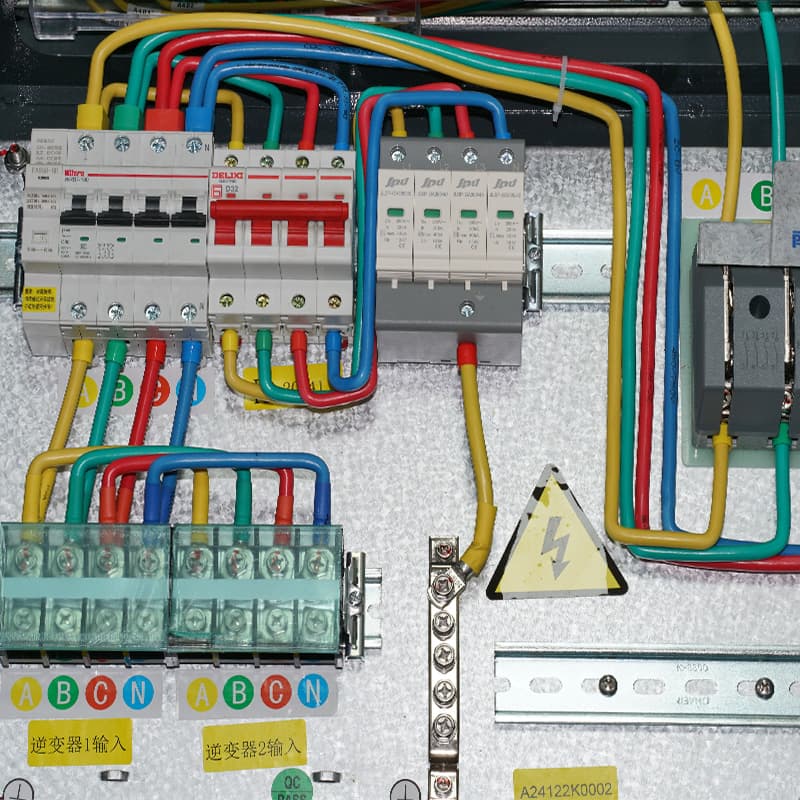
In this way, when lightning current causes a rise in ground potential, all equipment experiences a similar potential increase, but the relative potential difference between them remains small, preventing backflash.
Adjusting expectations and priorities: It must be acknowledged that completely dissipating the energy under these conditions is unrealistic. Protection objectives should focus on: a) preventing electric shock to personnel and equipment damage through equipotential bonding; b) limiting overvoltages between lines (e.g., L-N, L-PE) to within the equipment's tolerance using the clamping action of surge protective devices (SPDs).
Jinli Electric WeChat

Address :No. 97-2 Yonghe Road, High-tech Zone, Hefei, Anhui, China
Tel : 0086-0551-65307363
E-mail : jinlispd@ahjinli.com
E-mail : lynn@ahjinli.com
Whatsapp/Wechat : 15209885162